
Who gets a say in developing good practice of climate services for climate risk management in the (re)insurance sector?
JAN 16 2025
By Marie Ekström
Dr Marie Ekström is a senior climate advisor with the Climate and Sustainability team at the global re-insurance broker Gallagher Re. With a background in climate science, Marie has 20+ years of academic and government research experience across a wide range of topics, often interdisciplinary and generally in a climate change context.
Catastrophe Models: The Backbone of Risk Management in (Re)Insurance
The (re)insurance sector is an advanced user of weather and climate information. Its workhorse, the catastrophe model, is critical to the three levers that insurance use to manage risk, namely pricing (cost of premium), underwriting (policy specifications) and reinsurance (cede predicted risk to other companies). A company may use its own in-house developed catastrophe (cat) models or licence services/models from risk modelling and analytics companies. Structurally, these models require information about the system that leads to loss. Hence model components represent hazard, vulnerability, exposure, and losses (claims data). Their internal relationships are calibrated using observed data and the validity of models are extensively tested both by model providers and those that license them. Today, cat models are used to estimate losses for tropical cyclones, flood, severe convective storms (tornados, straight line wind and hail), windstorms (extra tropical cyclones), and even wildfire in the year ahead.
Modern cat modelling has been a key component of insurance provision since the 1990s and reflects a key differentiator between companies in developing their own View of Risk. Hence cat models and their underpinning data are commercially sensitive assets. That they are, commercially sensitive and therefore exercise limited transparency, is entirely uncontroversial when the model applied to a context for which it is developed, and in any case, a user can switch provider if the model performance is poor. But what if you apply this type of model to a new reality, for which much of the underpinning data is no longer representative, and it is impossible to verify its performance? Would it be a controversial practice if its output informs views of future risks and associated costs to society? The answer will likely vary depending on who you ask.
Closing protection gaps of losses caused by natural hazards
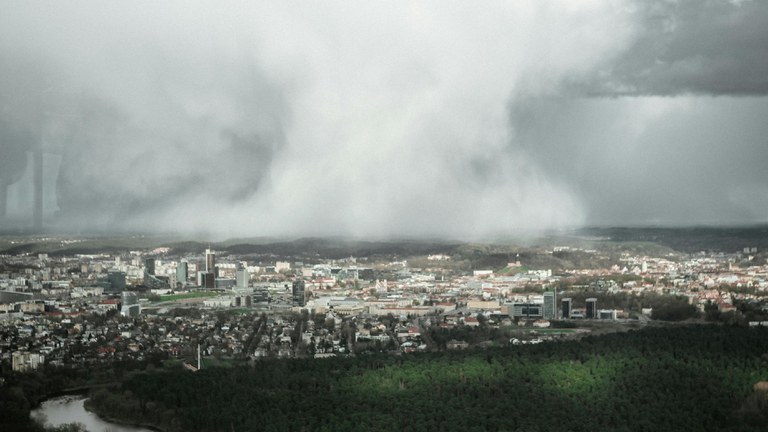
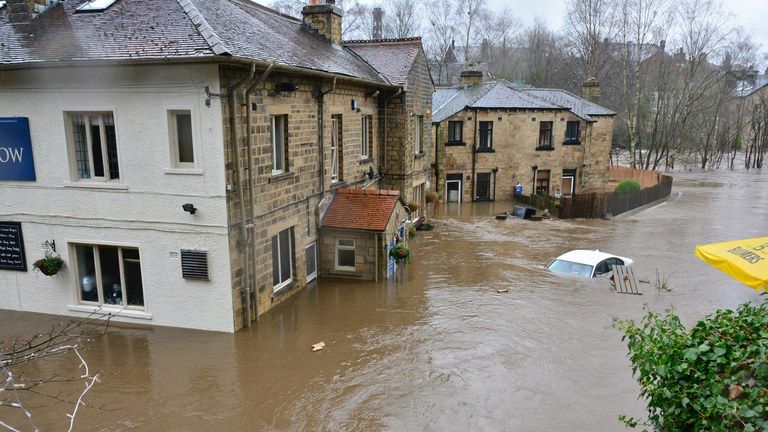
The requirement to estimate climate-change related risks in insurance is a relatively new ask, generally intended for risk management, and primarily driven by regulatory bodies. The latter act in response to a broader societal recognition of a changing risk landscape that may lead to mispricing of hazards and/or expansions of protection gaps, the latter speaking to a reality when insurance is not offered, or effectively unavailable because the premium is unaffordable. Currently within the European Economic Area (EEA), only about a quarter of losses caused by natural hazards are insured (including non-meteorological phenomena)(1). From a macro-prudential regulatory perspective, it is critical to mitigate the growth of such gaps, and the (re)insurance industry holds a key role in limiting their growth.
EIOPA’s response to a insdustry concerns on uncertainty in long-term projections
Whilst the (re)insurance sector itself broadly agrees with the need to consider forward looking climate risk, how to meaningfully do so is not entirely clear to risk managers. Signs of hesitation and pushback on new reporting demands are found if looking at industry feedback to a 2021 consultation paper by the independent advisory body European Insurance and Occupational Pensions Authority (EIOPA) on climate change materiality assessment, and the use of climate change scenarios in the ORSA (Own Risk and Solvency Assessment). Many industry entities raised several points of concerns, such as the inherent uncertainty in long-term projections and hence the utility of deriving information for such time horizons, and a desire to have large flexibility in deciding what tools and assumptions are used to explore climate risk (e.g. to match size of business, expected exposure and lines of businesses)(2).

It is interesting to compare the difference in language when EIOPA responds to the feedback in A) the initial resolution table compiling the industry feedback and B) the formal EIOPA feedback statement published in 2023(3). On the purposefulness of considering long-term scenarios, EIOPA initially note that as uncertainty is inherent in risk management, this is not a reason for ignoring the risk, pointing to ‘what if’ scenarios being a mainstream tool to conduct long-term analysis, and that information beyond planning horizon can be relevant for strategic planning importance to consider e.g. trends in physical underwriting risks. In their 2023 feedback statement, the language is similar. They affirm that the time horizon of climate change is considerably longer than the one usually used in ORSA, and that the challenge lies in reconciling the time scale of physical change with that used for operational risk assessment on current business model. They further note that this challenge may require a new approach in the ORSA. On the wish to have maximum flexibility in how climate risk is estimated, there is a clear difference in tone between documents. In the resolution table, EIOPA pushes back on the industry opinion, noting that in fact some level of common expectation from insurance companies is justified as few undertakings currently assess climate change risk scenarios in their ORSAS. A milder tone is later used in the feedback statement. EIOPA now agrees with a need for diversity across approaches and models used for climate change reporting. It recognises these are early days, and flexibility is warranted now to foster future development of new and more effective models.
Commercial sensitivity and the transparency dilemma
How to meaningfully proceed with climate scenario analysis and stress tests despite limited guidance on best practice, is clearly frustrating for risk managers. From a decision-making standpoint, if there is no established best practice, then options for good practice will have to suffice. These are options to be applied and modified to adapt to own circumstances. However, the identification and agreement on what constitutes good options is hampered by using models that are commercially sensitive. The commercial aspect leads to a lack of transparency in method and data choices that halts building a shared and critically examined understanding. In her article Climate Services: The Business of Physical Risk, Condon (2023) provides an excellent motivation for why society should not rely on private companies to provide equitable and reliable guidance on climate risk, particularly when this information ends up informing regulatory views that inform decisions aimed at protecting the public good(4). So, if not businesses, who gets a say on what constitutes good practice for forward-looking risk management in the (re)insurance sector?

Redefining collaboration in climate risk management
Perhaps it is meaningful to pause and reflect on what information can be robustly explored given current knowledge across the physical and socio-economic sciences, and who decides on what is deemed ‘robust’ to estimate physical climate risk. What shared understanding needs to be developed, by whom, to agree on a strategy that reduces climate risks to the public and financial organisations?
That adapting to climate risk is difficult because it does not let itself to be tamed by traditional tools is not a new challenge. In 2012, Jeroen P. van der Sluijs(5) wrote eloquently about the post-normal perspective that exists in the policy-climate risk interface. Noting that whilst getting ‘the facts right’ is important, it is not solely sufficient when the decision-making space is fraught with deep uncertainties and there are fundamental limitations to predictability. In this post-normal context, problem solving (such as identifying meaningful risk management practices for the (re)insurance sector) requires scientific teamwork with participation from business, politics and science. To quote van der Sluijs, this will require an acknowledgement of a plurality of legitimate perspectives because “Scientists from different backgrounds often have irreconcilable and conflicting yet tenable and legitimate scientific interpretations of the same body of scientific evidence”.
A need for participatory spaces for a shared understanding
Headspace for reflection is in short supply irrespective of one’s work environment, and for some jurisdictions, regulators already require peril-specific loss-estimates given set emission scenarios and time horizons. However, in an EU setting, regulators are still flexible and in their guidance on methodological principles of insurance climate stress testing, it is noted that important elements also include raising awareness, enhancing risk management capabilities, and building understanding of how insurers asses their own climate risks(6). Perhaps the limiting factor to developing good practice today is the lack of participatory spaces where insurers, scientists and regulators can challenge views, recognise ignorance, and explore meaningful risk management objectives.
(1) https://www.eiopa.europa.eu/publications/supervisory-duty-address-insurance-protection-gaps_en
(2) https://www.eiopa.europa.eu/document/download/9157604f-1a70-4593-a4a3-91cce0c438fb_en?filename=Resolutions%20table%20on%20the%20consultation%20of%20climate%20scenarios%20in%20ORSA.pdf
(3) https://www.eiopa.europa.eu/publications/application-guidance-climate-change-materiality-assessments-and-climate-change-scenarios-orsa_en
(4) Condon, M., 2023. Climate Services: The Business of Physical Risk, 55, Arizona State Law Journal 147. https://scholarship.law.bu.edu/faculty_scholarship/3658
(5) Van der Sluijs, J.P., 2012. Uncertainty and Dissent in Climate Risk Assessment: A Post-Normal Perspective, Nature and Culture 7(2) 174-195, doi:10.3167/mc.2012070204
(6) https://www.eiopa.europa.eu/document/download/d244041a-8e2a-4363-ad48-2a4912f732e9_en?filename=Methodological%20Principles%20of%20Insurance%20Stress%20Testing%20-%20climate%20change%20component.pdf