
Behind the Scenes of Training FAIR Data Principles in the Co-creation of Climate Services
JUL 2 2026
By Annemarie Groot, Viola Bennink, Xavier Domingo and Vladimir Djurdjevic
Annemarie Groot, is the team lead of the Climate Resilience team at Wageningen Environmental Research, Wageningen University and Research in The Netherlands. She has extensive experience in facilitating processes involving scientists, practitioners, and policy makers to support the co-creation of climate services. She coordinated the Copernicus Climate Change Services (C3S) contract ‘ User Learning Services’. A European wide training programme in use of the Copernicus Climate Data Store Platform.
Viola Bennink, is a project and communication manager at the Climate Resilience team at Wageningen Environmental Research, Wageningen University and Research in The Netherlands.
She is involved in various projects in the field of climate change & nature-based adaptation, including Climateurope2 and Climate-ADAPT.
Xavier Domingo Soldado, is a physicist working in the Climate Services Team at the Barcelona Supercomputing Center - Centro Nacional de Supercomputación. He currently leads Work Package 2 in the Climateurope2 project and works on climate services for urban environments.
Vladimir Djurdjevic, is a professor at the Faculty of Physics from the University of Belgrade. He specializes in climate modelling, risk and adaptation analysis. He leads the EXTREMES project, co-founded Green Art Incubator, and contributes to Klima101. He has received the WMO Borivoje Dobrilović Award, Faculty of Physics Award, Konstantin Jireček Medal, Green Leaf, and CPN Prize.
FAIR data
Climate services are evolving rapidly in response to growing societal demands for reliable, user-friendly climate information. As researchers and teachers working at the interface of science and application, we are constantly trying to match the available scientific climate information with the practical needs of users. We need to make sure that climate information is Findable, Accessible, Interoperable, and Reusable (FAIR), but also relevant. By actively involving stakeholders throughout the development process of climate services, these services become more aligned with real-world challenges.
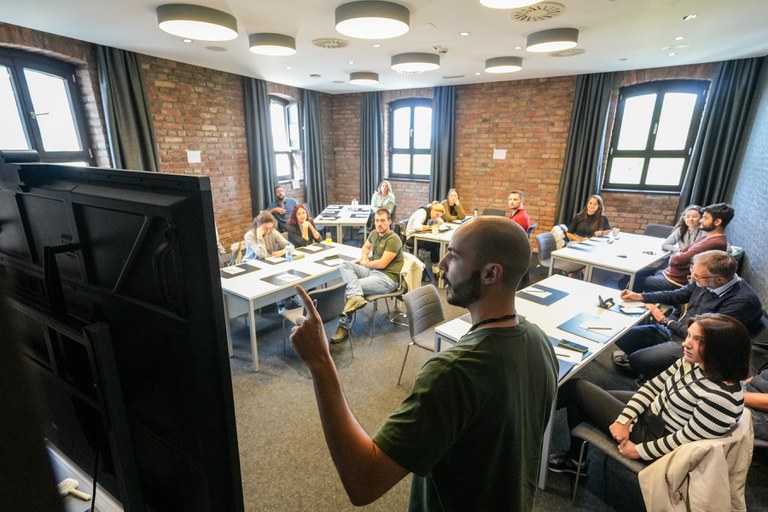
A recent training module on “FAIR data principles in the co-creation of climate services”, delivered during the Climateurope2 Festival in Belgrade (September–October 2025), offers valuable insights into how to facilitate co-creation. In this blog we reflect on our experience from a trainers’ perspective.
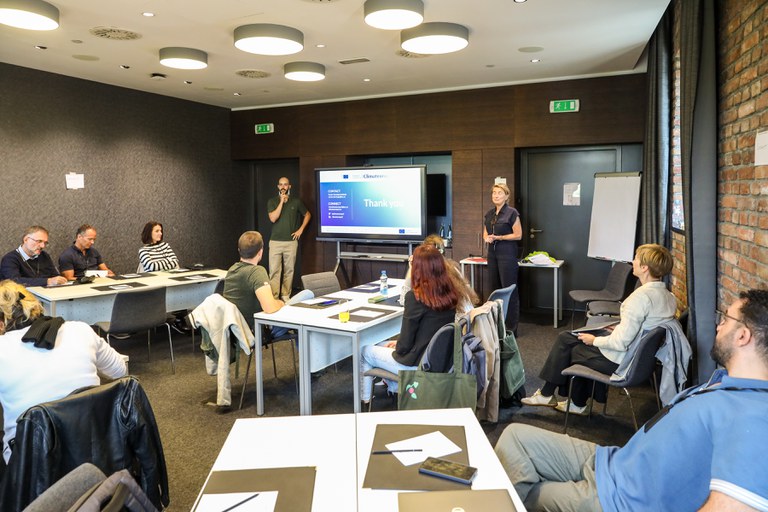
Potential users of climate services
We discussed beforehand who the participants in the training could be. Potential users of climate services can be end-users, intermediary users, producers, providers, communicators for outreach and enablers. The training module in Belgrade was organised for early careers, master students and PhD students who are interested in the development of climate information to address climate mitigation and adaptation challenges. We figured that most of the participants would not produce climate information themselves throughout their career. Instead, as for example water professionals or urban planners, they would become end users of existing climate services or intermediary users who would be processing or contextualizing the climate information. Therefore, the programme, its content and process purposefully targeted end-users and intermediary users.
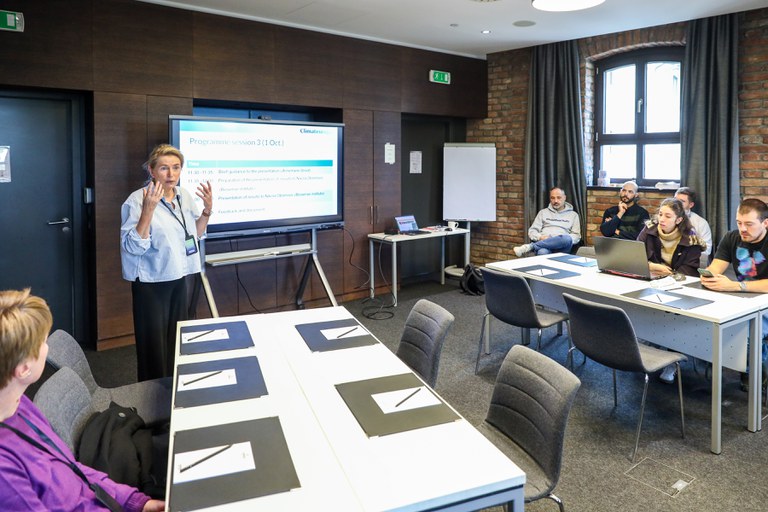
Learning through real-world complexity
The training was centred around a real-life case study: a climate-related challenge presented by a stakeholder from the BioSense Institute. Participants worked in interdisciplinary groups to design a climate service addressing this challenge with the FAIR principles in the back of their mind.
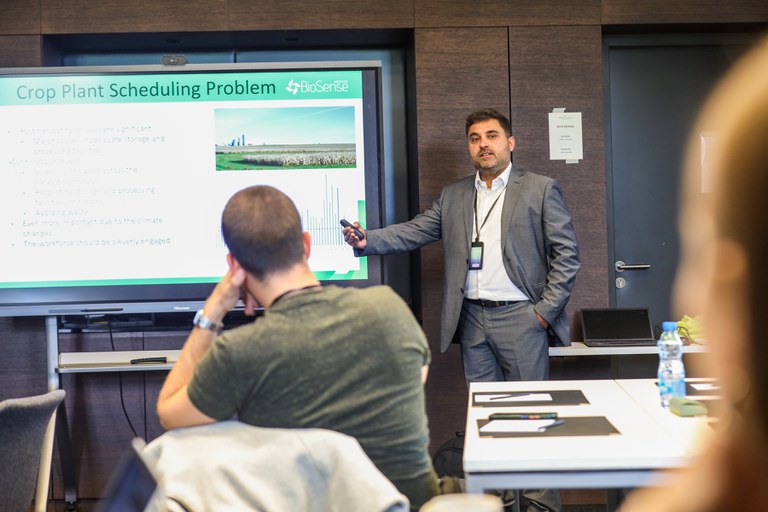

Climate-related challenge
The climate-related challenge presented in the case study focused on crop planting and harvesting schedules under changing climate conditions. The stakeholder highlighted that post-harvest food losses can be significant, particularly when continuous harvesting has to be balanced with limited storage and processing capacities. Participants were asked to consider how climate information, especially forecasts of plant growing degree units, could support better planning of planting and harvesting periods, reduce deviations between harvested quantities and available storage capacity, and ultimately help avoid food waste.
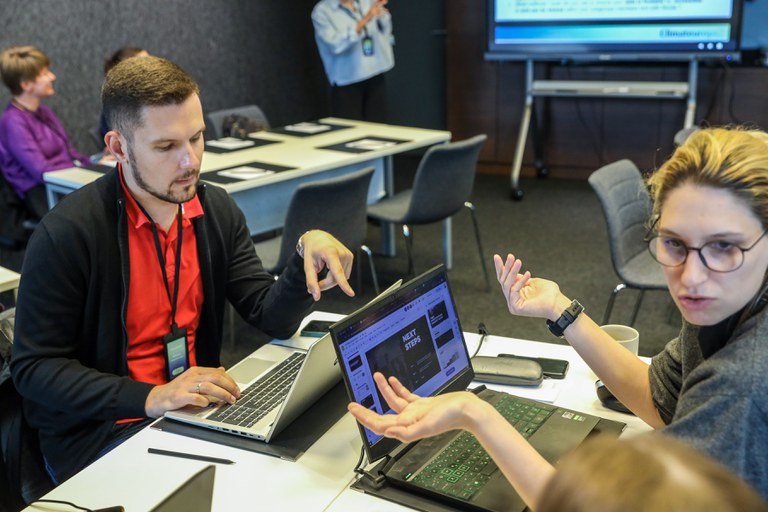
Participants experienced that it was challenging to come to an understanding about the complex question of the client as an important first step to design a feasible adaptation solution. On top of that, they had to come up with a proper plan for a climate service that would adhere to the FAIR principles. Navigating (climate) data sources was perceived to be confusing and difficult by the participants.
We as trainers learned through real-world complexity as well. We learned that 3 times a 1,5h session to build capacity in co-creating climate services of participants with hardly any knowledge about climate data and their sources, is too ambitious. On the other hand, participants have now experienced the difficulties and importance of getting a clear picture of the climate challenge at stake through interaction with stakeholders. If the training would be repeated with similar objectives and set up, the information leaflet on the training should provide clear information on the prerequisites such as some knowledge about climate data and climate data sources.
If we want FAIR data management to become mainstream for end-users and intermediary users of climate services, we recommend organising a training event specifically devoted to FAIR data management. It is the foundation that connects data, users, and decisions, enabling climate services to deliver meaningful and lasting value to society in a standardised way.