
Climateurope2 develops info-sheets to support easy understanding of climate services
JUL 14 2026
By Editor
As climate-related information becomes increasingly important for policymaking, planning, and decision-making across sectors, ensuring that climate services are accessible, understandable, and reliable is becoming a key priority. To support this effort, the Climateurope2 project has developed a series of concise, one-page easy-to-read info-sheets designed to explain key concepts and summarise important findings and documents produced within the project. These are shared on the project website, the platform and in social media.
Four info-sheets that explains each of the four main components that Climateurope2 has identified as a step towards defining the boundaries of climate services to help support the discussions on what constitutes a quality-assured and equitable climate service has been produced. These are based on previously published work within the Climateurope2 project, including the Key Messages 2026 and the CE2 Glossary and Training Modules, as well as the peer-reviewed article on standardisation of equitable climate services.
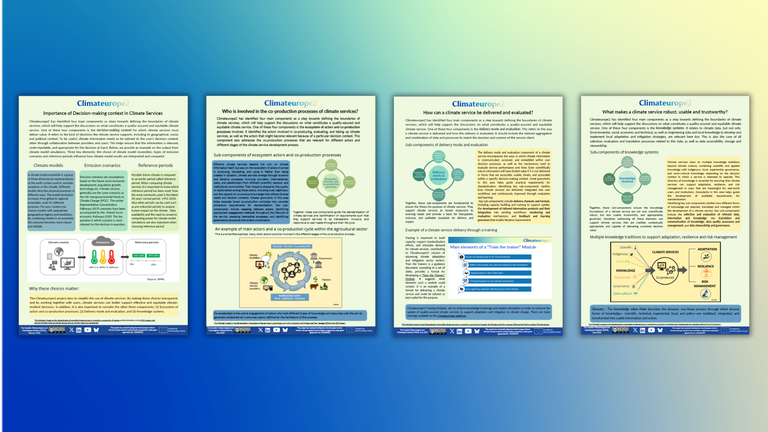
The materials have been specifically designed to reach a wide audience. Policymakers, government agencies, climate service providers, journalists, educators, and researchers are among the target groups expected to benefit from these resources. By presenting information in a concise and accessible format, the project aims to support greater understanding of climate services and encourage informed discussions among both specialists and non-specialists.
Recognising that climate services terminology and processes can sometimes be complex, Climateurope2 has also developed an introductory info-sheet explaining the fundamentals of climate services and the four components. This resource outlines what climate services are, why they matter, and why standardisation is considered an important step in ensuring consistency, quality assurance, and fairness in the services provided.
In addition, a separate info-sheet titled “Enhancing Climate Services: Key Recommendations, Best Practices, and Future Trends” has been produced. This publication serves as a summary of key findings generated throughout the project and highlights practical recommendations and emerging directions for future development within the field.
During the final year of the project, with much of the work reaching completion, other info-sheets will be developed to ensure that the results are accessible to all relevant stakeholders.